Address
Blyth, Northumberland
U.K. NE24 2QW
Telephone
+44(0)1670 336766
Opening Hours
Monday to Friday: 08:00 - 17:30

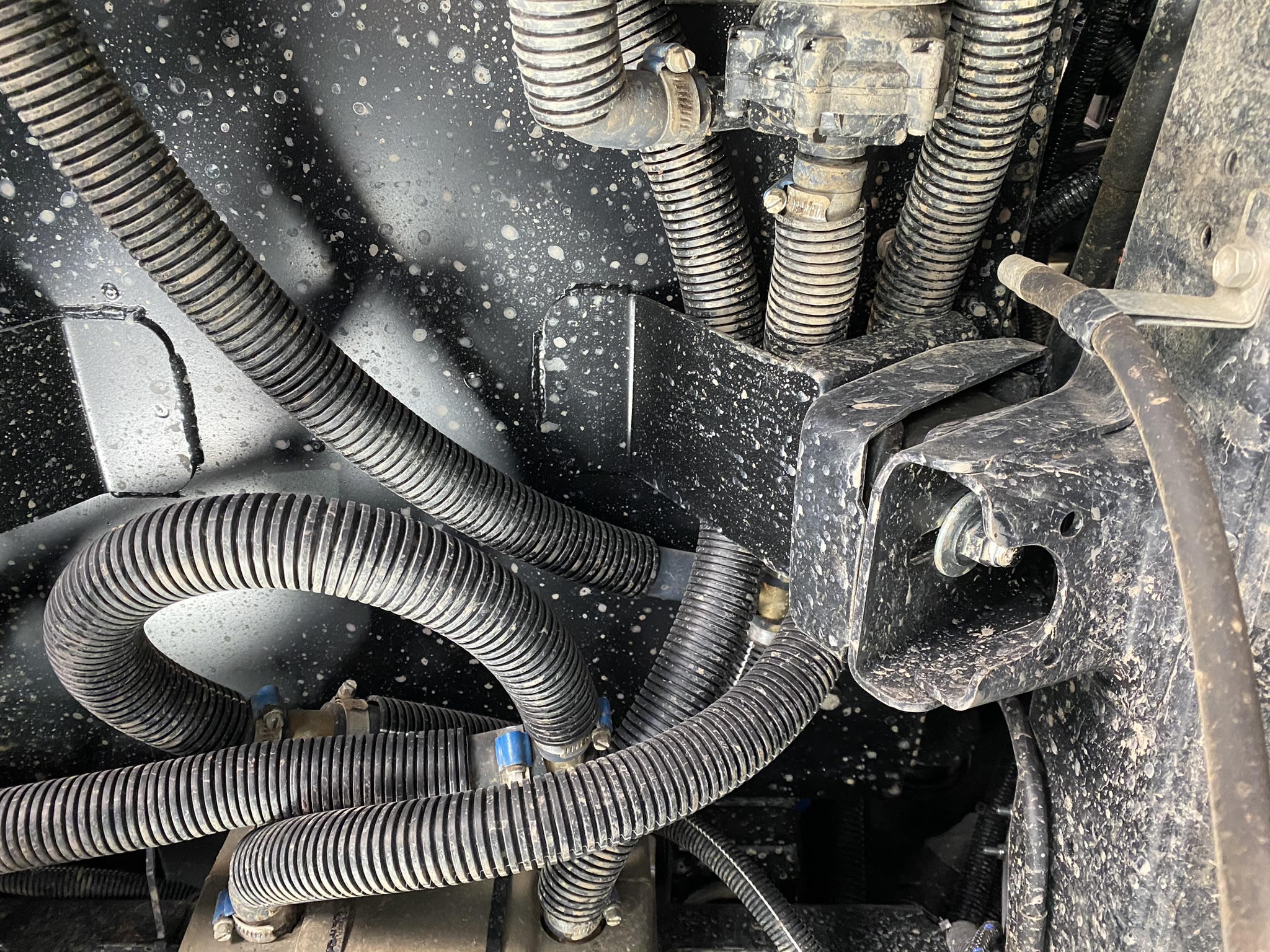
Tesa tape grades, PET braid, nylon net sleeving, thermal foil wrap, space taping and split convoluted conduit — when to use each, where each fails, and why cable ties alone are not a cable management strategy.
Vehicle cable loom management — taping, sleeving, thermal protection and why cable ties alone are not a cable management strategy
A well-managed cable loom does three things: it protects individual cables from abrasion, vibration and environmental damage; it holds cables together into a tidy, traceable bundle; and it makes the finished installation look like it was built by someone who knew what they were doing. Those three things are not separate concerns — a loom built properly achieves all three at once.
Cable management is not an afterthought. Decisions about routing, support, protection and finishing should be made before cables are cut to length, not after.
Cable ties are the default cable management tool for most DIY installers and a significant number of professional ones. They are useful. They are not sufficient on their own.
The problem with cable ties as the primary management method is what they do to cables at the tie point. A cable tie, properly tensioned, creates a point of localised compression and a hard edge against which the cable flexes under vibration. Over time that repeated flexing at the tie edge causes abrasion of the insulation and fatigue in the conductor strands — exactly the failure modes that good cable management is supposed to prevent. A vehicle loom held together entirely by cable ties, with bare cables running between them, is essentially a collection of potential failure points waiting for enough vibration cycles to develop.
Cable ties have their place — securing a loom to a chassis point, providing final retention after the loom is built, holding a branch breakout in position. They are not a substitute for building the loom correctly in the first place.
Tesa is a German manufacturer whose harness tapes are the de facto standard in European OEM vehicle harness production. If you have ever unwrapped a factory wiring loom on a European car, the tape holding it together almost certainly came from Tesa. Note that this is not a reference point to follow blindly in the leisure vehicle world — OEM campervan and caravan harness finishing is often price-driven rather than engineering-driven, and where a properly built loom would use Tesa PET fleece tape, what you actually find is frequently bare cables on cable ties or cheap PVC tape that lifts at the edges after two years. Look at automotive OEM harnesses for the reference, not leisure vehicle ones.
Tesa harness tapes bond to themselves rather than relying on a pressure-sensitive adhesive. This means they do not leave adhesive residue, they do not peel back at temperature extremes, and they do not allow moisture to wick along the tape edge the way conventional adhesive tape can. They are formulated to resist abrasion, temperature cycling, oil and UV exposure.
Tesa 51608 (PET fleece tape). The workhorse for automotive loom building. Soft, conformable, slightly textured fleece backing with excellent noise and vibration damping characteristics. Used for the main loom body where flexibility and NVH performance matter. The standard choice for interior and protected runs where a fully dressed loom is required.
Tesa 51036 (fabric / cloth tape). Higher abrasion resistance than the fleece type. Used where the loom runs through areas with more mechanical risk — grommets, pass-throughs, areas where cables might contact bodywork. Also the correct tape for wrapping individual cable branches at breakout points.
Tesa 51026 (PVC tape). Smooth PVC backing with higher temperature resistance. Used in higher-temperature environments and for final finishing on branches and tails.
Tesa 4289 / 60760 series (fleece / foam combinations). Used for noise isolation where the loom is in contact with body panels or where rattle suppression is needed.
For most leisure vehicle and campervan loom work, Tesa 51608 is the correct starting point. Tesa tape is available through automotive electrical suppliers and some electrical wholesalers. It costs more than generic electrical tape and is worth every penny of the difference.
Space taping. Space taping is wrapping tape in a spiral with a deliberate gap between each pass rather than overlapping. It is the correct technique at branch breakout points, at any point in the loom that needs to flex, and at grommet entry and exit points where the loom transitions from fixed to flexible. It allows movement without the tape cracking or delaminating, and it is the standard OEM technique everywhere that full overlap wrapping would restrict flex or add unnecessary bulk. For caravans and trailers where vibration loading is lower and NVH is not a significant concern, a neat spiral space tape wrap on the main loom body is a perfectly adequate and considerably faster alternative to a fully dressed overlap-wrapped loom — provided the tape is the right material for the environment.
PET braided sleeving (expandable braided sleeving) is a tubular mesh of woven polyethylene terephthalate fibres. It expands radially to accept the loom and then contracts around it, providing abrasion protection and a clean, professional appearance. OEMs use it because it is the correct tool — it protects against abrasion without adding significant stiffness, allows the loom to flex naturally, resists a wide temperature range (typically rated to 125°C continuous — verify your specific product), and produces a finished loom that looks engineered rather than assembled.
PET braid breathes — moisture that enters the sleeve can evaporate rather than being trapped. This is a significant advantage over solid conduit in a vehicle environment where condensation and moisture ingress are normal rather than exceptional.
Nylon net sleeving. A lighter-weight, lower-cost alternative to PET braid. Woven nylon mesh that provides similar expandability and a tidy appearance with somewhat less abrasion resistance. Suitable for interior, protected loom runs where abrasion protection is not the primary concern but you want the loom held together cleanly and looking professional. Easier to source than PET braid for some and perfectly adequate for interior van and motorhome runs away from mechanical risk areas.
In a factory harness you will typically find Tesa tape on the base loom with PET braid over the top for abrasion protection on runs that pass through mechanical risk areas. For interior leisure vehicle work, Tesa tape or nylon net sleeving alone is generally sufficient. Reserve PET braid for runs that earn it.
Where cable runs pass near exhaust components, turbocharger plumbing, or other significant heat sources, abrasion protection alone is not sufficient — the loom needs protection from radiant heat. Thermal foil wrap (reflective heat shield tape or self-adhesive aluminised glass fibre wrap) reflects radiant heat away from the loom rather than absorbing it.
Thermal foil wrap is applied over the base-wrapped loom on the heat-facing side, or as a full wrap where the loom passes directly through a hot zone. It is not a substitute for correct routing — the first priority is always to route cable runs away from heat sources. But where routing options are limited by packaging constraints, thermal foil wrap is the correct response. Used correctly in motorsport and performance automotive work as standard practice; underused in leisure vehicle and campervan installations where routing near diesel heater exhaust pipes and generator exhausts creates similar requirements.
Check the temperature rating of the product against the actual ambient temperature in the location. Not all reflective wraps are rated the same — some are suitable for moderate heat reflection only and will not protect against direct contact with high-temperature surfaces.
There are situations where mechanical protection beyond tape and braid is warranted — runs near moving parts, genuine crush or impact risk areas, locations where the loom must be protected from direct mechanical damage. For these situations conduit is appropriate. But the type of conduit matters.
Solid smooth-bore conduit is the wrong choice for most vehicle applications. Water enters, and solid conduit holds it against the cable insulation indefinitely — accelerating corrosion at termination points and degrading insulation over time. If conduit is specified, use split convoluted conduit (corrugated split loom). The split allows installation onto an existing loom without disconnecting anything. The corrugated construction and the split both allow water to drain and moisture to evaporate. If the run dips at any point, make sure the lowest point can drain — water will find it.
Use appropriate grommets and end fittings at each end of the conduit run. A conduit edge without a grommet or end cap is a cable abrasion point, not a protection solution.
Interior, protected, away from heat and moisture: Tesa 51608 PET fleece tape or nylon net sleeving. Space tape wrap acceptable for caravans and trailers. Cable ties for retention only, over the dressed loom.
Grommets, pass-throughs, panel transitions: Tesa 51036 fabric tape at the risk point. PET braid or short conduit section through the grommet where abrasion risk is higher.
Exposed runs, underside of vehicle, wheel arch proximity: PET braid over Tesa base wrap. Cable ties over the braid at appropriate intervals. Consider split convoluted conduit for sections with genuine mechanical risk.
Engine bay, periphery of heat sources: Tesa 51026 PVC tape or equivalent temperature-rated tape. PET braid rated to 125°C minimum. Thermal foil wrap on the heat-facing side where near exhaust or turbo plumbing. Verify temperature ratings against actual ambient.
Near moving parts, crush or impact risk: Split convoluted conduit, grommeted at both ends. Secured to prevent the conduit itself from moving into the danger zone.
Never: unprotected bare cables between cable ties with no other management. That is not a loom.
| Material | Best used for | Notes / limitations |
|---|---|---|
| Tesa 51608 PET fleece tape | Main loom body, interior and protected runs, NVH-sensitive applications | The correct default for automotive loom building. Full overlap or space tape as required. |
| Tesa 51036 fabric tape | Grommets, pass-throughs, breakout branches, light abrasion risk areas | Higher abrasion resistance than fleece. Use at mechanical risk points. |
| Tesa 51026 PVC tape | Higher temperature environments, branch finishing | Better temp resistance than fleece types. Check rating for specific application. |
| Space taping (any harness tape) | Branch breakouts, flex points, grommet transitions, caravan / trailer main looms | Correct OEM technique at flex points. Adequate as primary method for low-vibration installations. |
| Nylon net sleeving | Interior protected loom runs, lightweight applications | Lower abrasion resistance than PET braid. Good tidy finish at low cost. Not for external or high-abrasion runs. |
| PET braided sleeving | External runs, under-vehicle, high abrasion risk areas, over-tape base wrap | Typically 125°C rated. Breathes — does not trap moisture. Preferred over conduit wherever possible. |
| Thermal foil wrap | Runs near exhaust, turbo plumbing, diesel heater exhaust, other heat sources | Reflects radiant heat. Not a substitute for correct routing. Verify temp rating for specific location. |
| Split convoluted conduit | Genuine mechanical crush / impact risk, near moving parts | Always use split type, not solid. Grommet both ends. Ensure drain provision at low points. |
| Cable ties | Final retention of dressed loom to chassis / structure | Never the primary management method. Always over dressed loom, not bare cables. |
This document is provided for general reference and educational purposes only. The guidance contained in it is intended to support informed decision-making and does not constitute engineering advice for a specific installation. It is the responsibility of the installer to verify the suitability of any material or method for their specific application and to ensure that any installation complies with applicable standards, regulations, and vehicle or equipment manufacturer requirements. Voltforge and Zeromachine Ltd accept no liability for loss, damage, injury or consequential loss arising from the use of or reliance on the information in this document.
Building a harness and need the connector assemblies to go with it? Our Deutsch DT pigtail kits are built with the same attention to specification that this guide describes. Browse the shop →